Uncategorized

Generating Towns for Townscaper in Processing

I’ve been playing Oskar Stålberg’s Townscaper recently and enjoying seeing how the algorithms react to changes. While looking for information on how garden paths are calculated, I stumbled across Chris Love’s article on the Townscaper file format. Using that as a starting point, I decided to try building up town maps in processing using Perlin noise to determine height, color, and distance above waterline.

My first attempt iterated the map while incrementing a 1D vector in Perlin noise space to determine these attributes. This gave a nice wavy pattern; but, wasn’t quite what I was trying for.

Continue reading
Standard
Uncategorized

Integrating a Voltmeter with fischertechnik

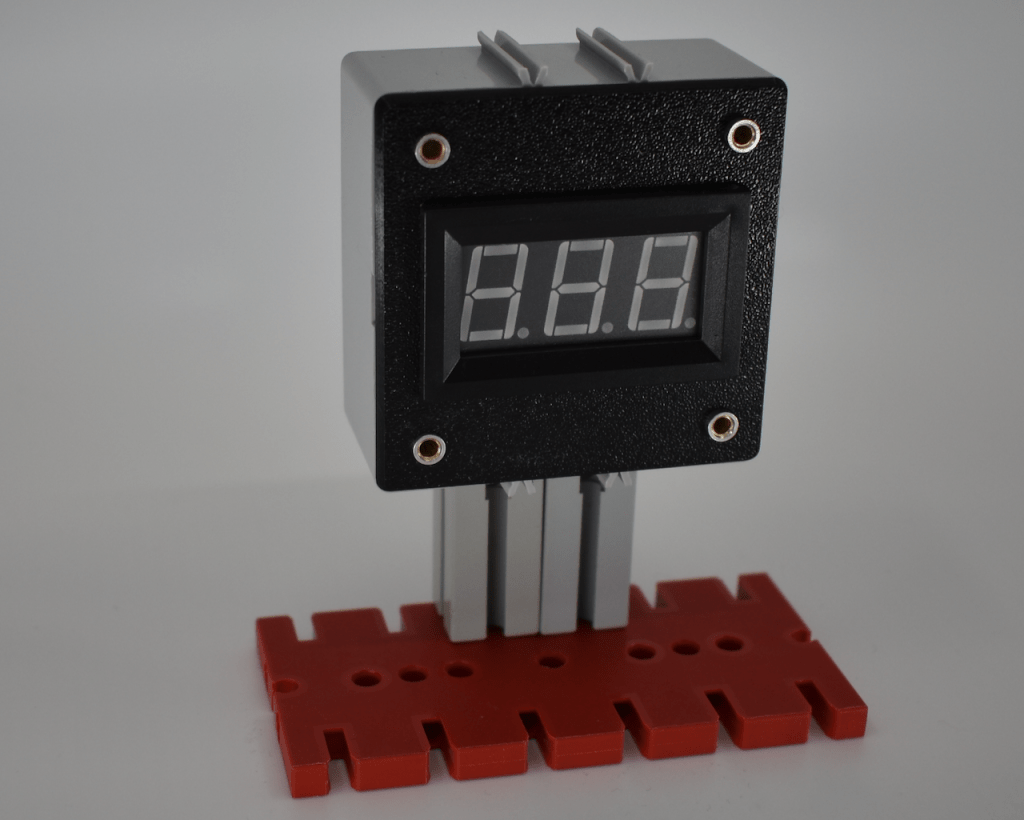
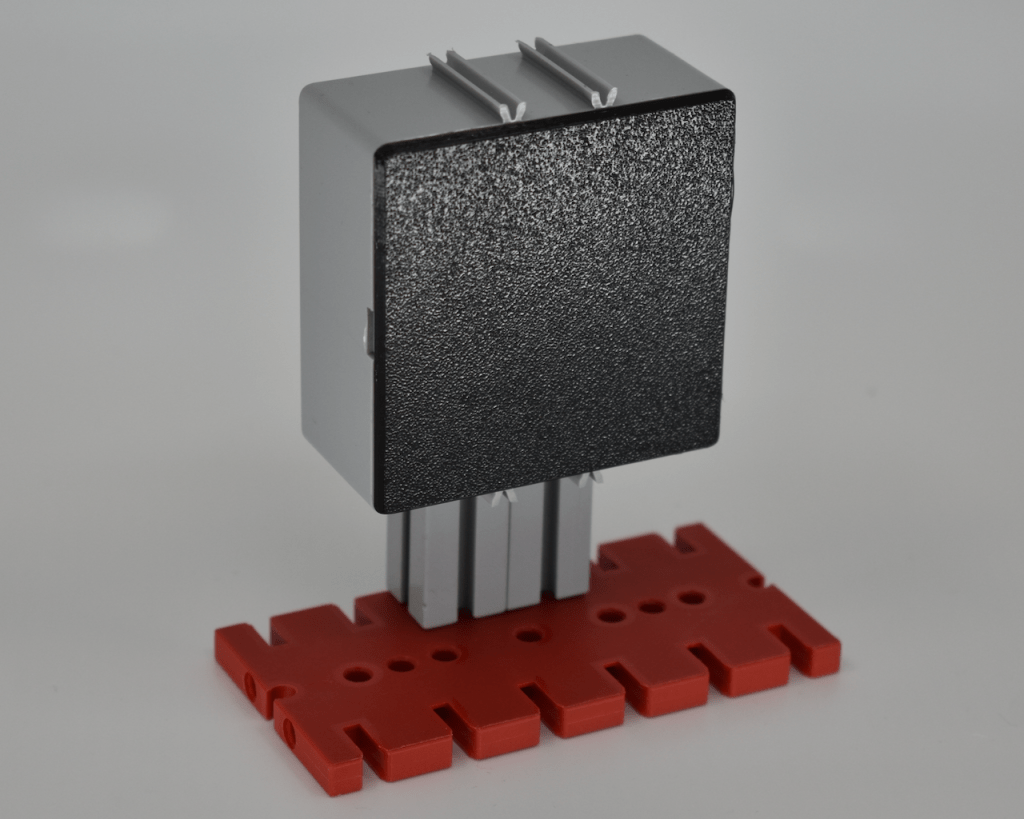
I took a detour on the road to powered speakers and remixed the cassette lid I previously designed in order to hold a panel mount voltmeter from Adafruit. I set out with a few goals:

  • Blend reasonably well with fischertechnik parts without requiring modifications to those parts.
  • Have two connectors each for positive and ground, so the module can be chained with other modules.
  • Use connectors that work as well as possible with fischertechnik plugs.
Voltmeter from Adafruit in 3d printed lid for fischertechnik cassette bottom
Continue reading
Standard
Uncategorized

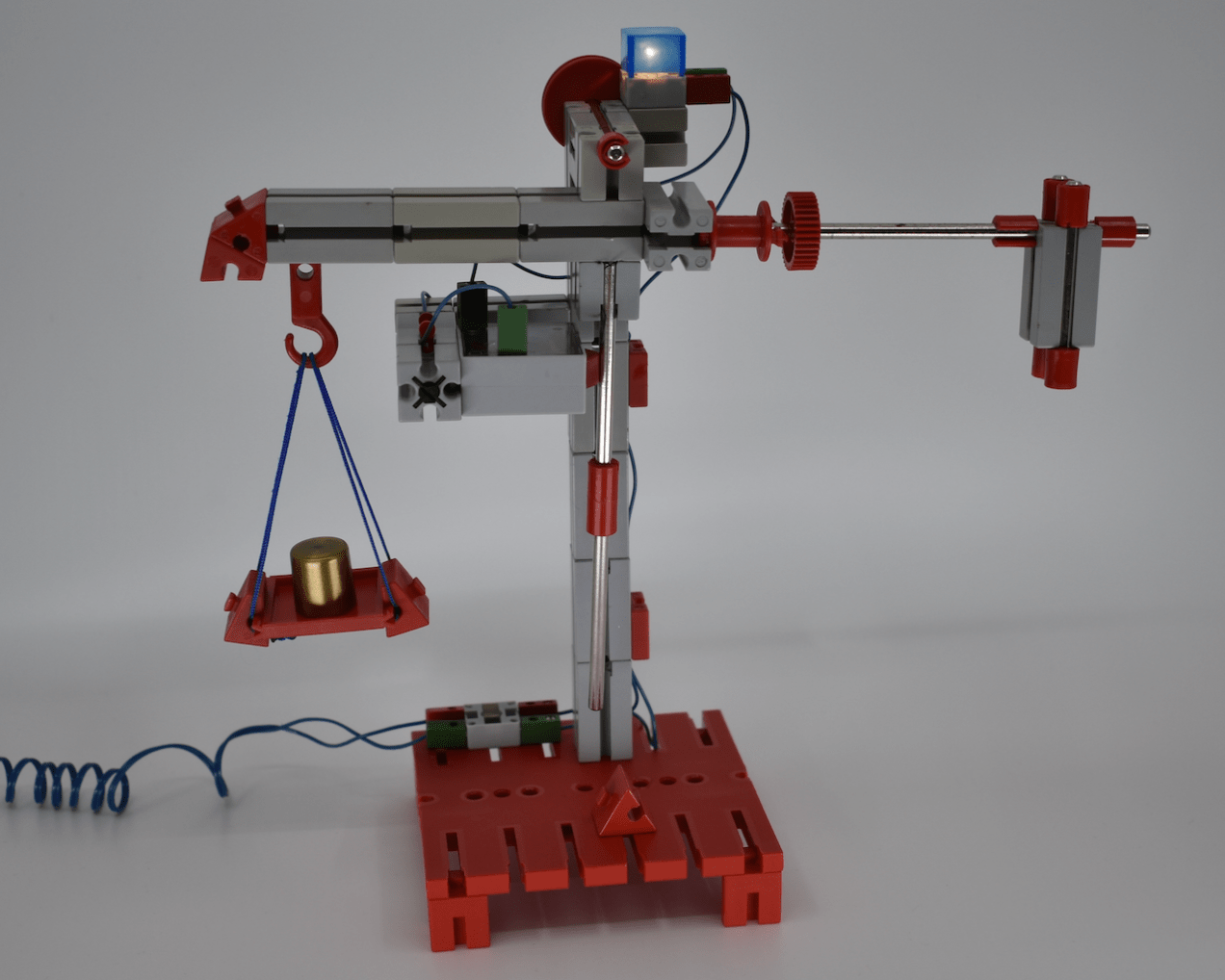
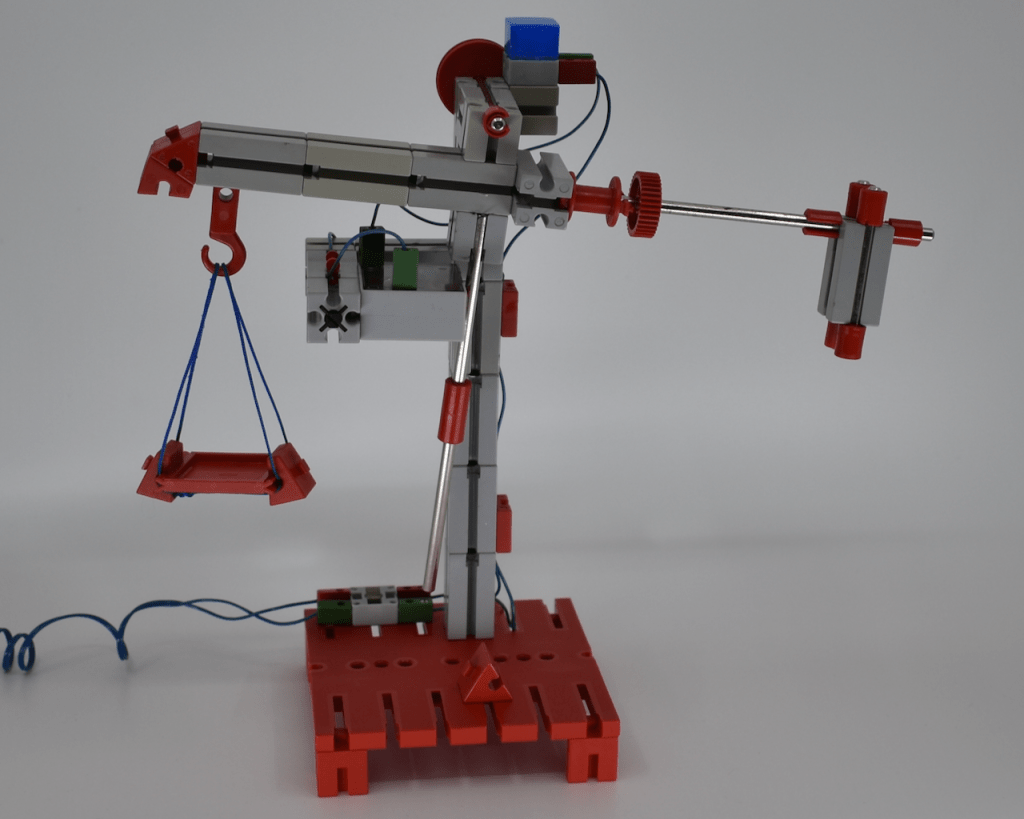
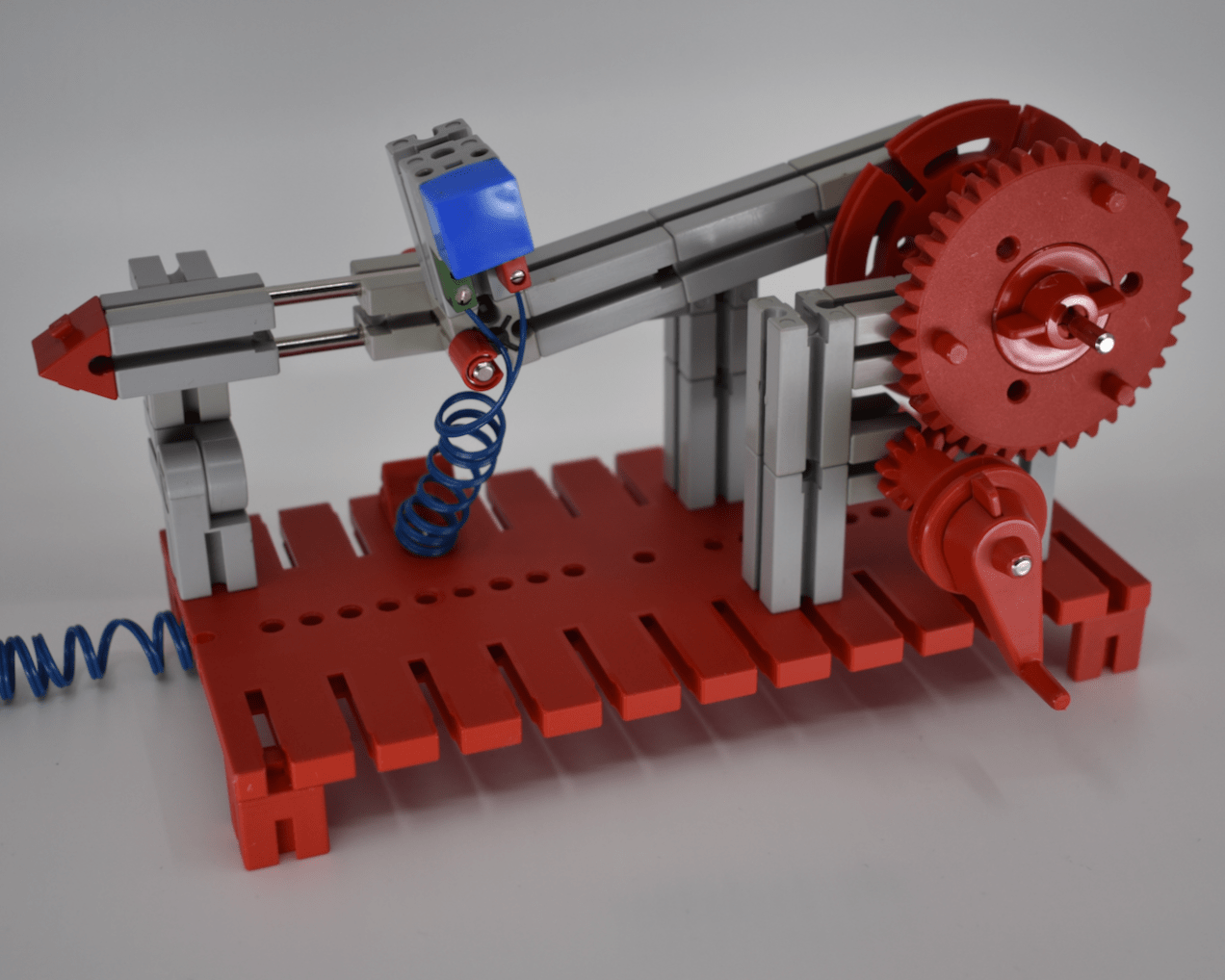
Building the fischertechnik EM1 – Blinking Light Model

The third model in the EM1 kit was particularly cool to build as it is the first model where the electric circuit is controlled by a mechanical component. It starts with a wheel hub whose rotation is driven by a motor. The wings on the hub are used as a cam to cyclically push a lever down and then release it; it reminds me a bit of a trip-hammer .

fischertechnik motor driving worm gears which turn a wheel hub used as a cam
Continue reading
Standard
Uncategorized

Designing a Lid for the fishertechnik Cassette Bottom

I’m working on adding a small powered speaker to a fischertechnik model and decided the simplest first pass would be an insert for the standard cassette that many of the older sets shipped with. I’d like to not alter the original part, so ideally, this will be a simple press-fit part which works very similarly to the stock cover. The first goal was to get a simple flat lid working.

3D printed lid for fischertechnik cassette bottom
Continue reading
Standard
Uncategorized

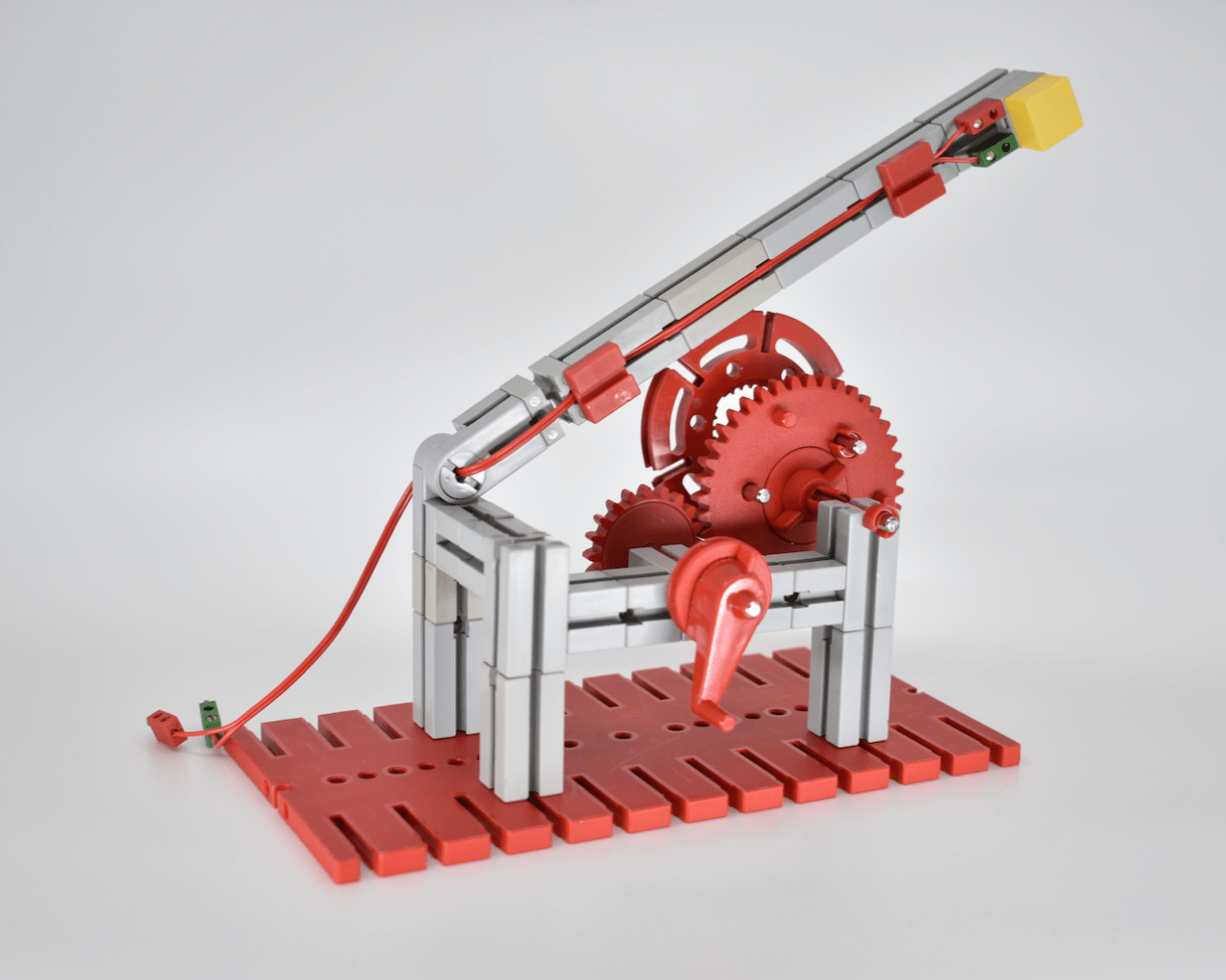
Building the fischertechnik EM1 Model 1

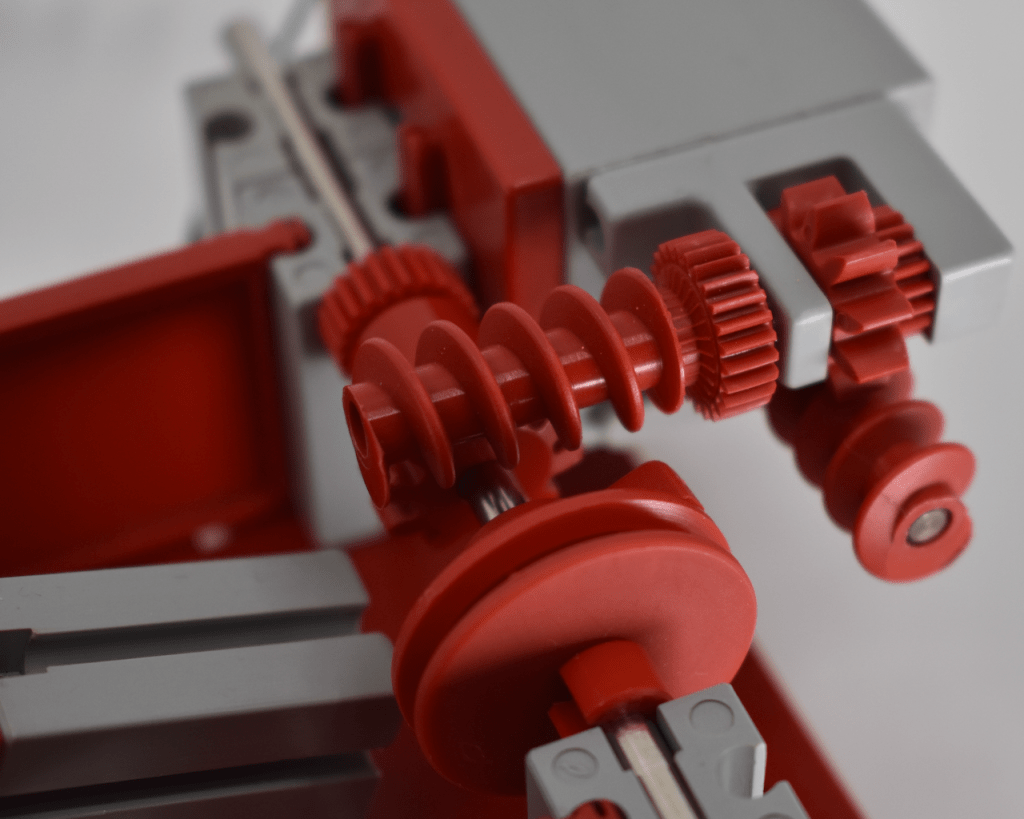
Growing up, I spent many hours playing with both Lego sets and fischertechnik sets. In my memory, they were functionally equivalent – just with different connecting systems and with fischertechnik having a stronger emphasis on mechanics and gears. I recently acquired some fischertechnik from that era and was pleasantly surprised by one additional difference.

Detail of fischertechnik gears
Continue reading
Standard
Uncategorized

Classic Computer, Modern IDE

Years ago, I spent a week in the wilderness of Utah.  The night sky was breathtaking; the days were spent in canyons mostly untouched by humans.  It was an amazing experience that I will always be grateful for.  However, by the end of the week, I was happy to return to modern conveniences.

Programming the IIGS on the IIGS feels like experiencing those canyons in Utah and, overall, very authentic. I’ve relived my early attempts in all their glory and frustration. Knowing the convenience of modern development environments, the second part has been bothering me more this time. I am accustomed to syntax highlighting, large screens, fast compile cycles, and all the other conveniences. Thankfully, there’s a solution for this:

With those three packages installed on my Mac, I can develop for the IIGS in Xcode and test in emulation.  This was a very straightforward installation process with one exception.  I did struggle a bit on Step 5 – Install ProFUSE. After some head scratching and overthinking the problem, I realized that from GitLab, I could simply select Repository -> Tags and then filter using the term profuse and a pkg file was provided.

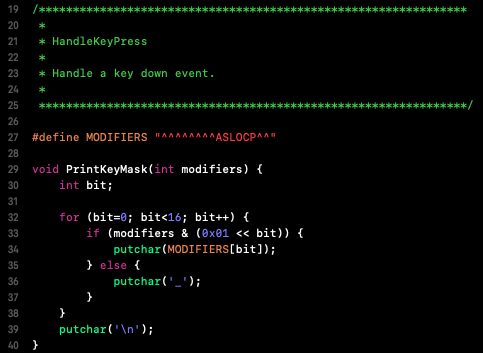
With everything up and running, the function I wrote for the first lesson is formatted and highlighted as I would expect:

Additionally, compile/test cycles are dramatically shortened with this setup. Overall, I feel like this is a reasonable compromise between staying 100% authentic to the original experience and having modern conveniences.

Standard
Uncategorized

Hello IIGS Key Events

On my second attempt at writing a game for the IIGS, I am trying to avoid unnecessary challenges. This translates into getting more comfortable buying books and tools to help me instead of trying to “just make do”. It also doesn’t hurt that I like the look of the USB drive that Juiced.GS sells containing The Byte Works’ collection of compilers and books – Opus ][: The Software.

Continue reading
Standard